LL
Ledger Live Login — a complete beginner-to-mid guide
Understand what "ledger live login" means, how to sign in safely, troubleshoot common issues, and level up your security with practical, non-technical explanations.
What is "Ledger Live login" — in plain language
"Ledger Live login" is simply the process of opening the Ledger Live app (desktop or mobile), connecting to your Ledger hardware wallet or restoring a software profile, and accessing your wallets to manage crypto. It's not a web password you enter on a website — it's an app-side connection that validates your device using hardware-based cryptography.
Think of Ledger Live as a digital front door and your Ledger device (like a Nano S or Nano X) as the physical key. The most important rule: the private key (your seed phrase / recovery phrase) never leaves the hardware device. Ledger Live helps you see balances, send/receive assets, and install apps — but it does not hold your private keys.
Why the login flow is different from ordinary apps
< world style="display:block;margin-bottom:8px;">
Crypto prioritizes ownership: if someone else gets your seed phrase or private key, they control your funds. Ledger Live's design means:
• Your device signs transactions locally — Ledger Live only relays signed transactions to the network.
• Ledger Live uses a pairing/passphrase step and optional PIN on the device — the app itself has no master password that can restore funds.
• Ledger Live support often involves firmware updates, application installs, and troubleshooting USB/Bluetooth connectivity rather than password resets.
Quick safety checklist
• Always update Ledger Live from the official source and verify signatures when asked.
• Never share your recovery phrase or enter it into your computer.
• Use a PIN and consider passphrase/cold storage for large holdings.
Step-by-step: How to perform a safe Ledger Live login
Follow this as a checklist. Each step assumes you're using an official Ledger device and an up-to-date Ledger Live application.
1
Install or open Ledger Live
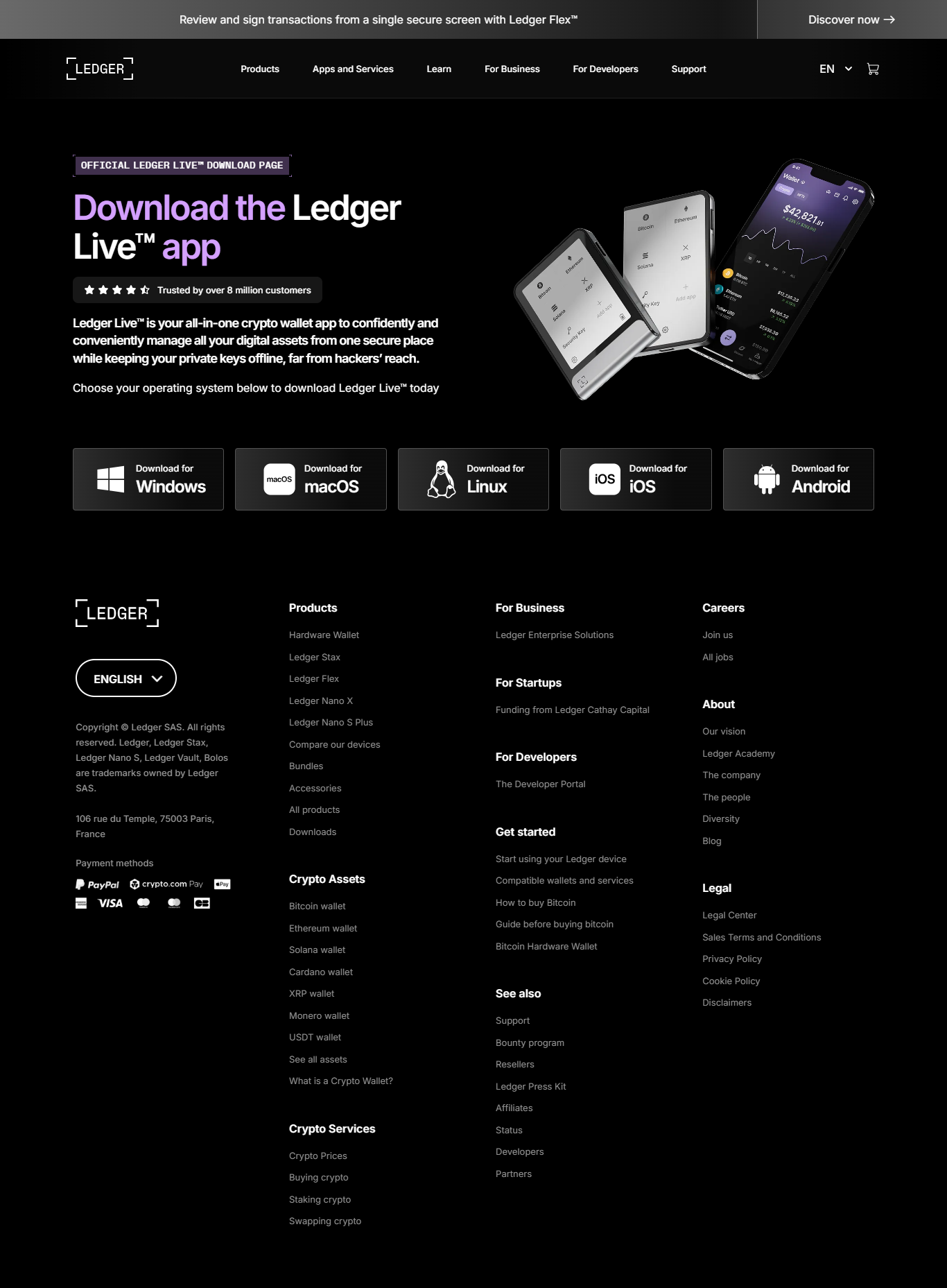
Download Ledger Live from the official source and open it. Choose desktop or mobile depending on your device.
2
Connect and unlock your Ledger device
Use the USB cable or Bluetooth (Nano X). Enter your PIN on the device — not on your computer — to unlock it.
3
Open the Ledger Live 'Manager' or 'Accounts'
Pair the device if asked. Ledger Live will detect installed apps (Bitcoin, Ethereum, etc.) on your device — this is normal.
4
Access accounts and sign transactions
Viewing balances is read-only. When you send crypto, Ledger Live will ask you to confirm the transaction details on your hardware device — review and confirm there.
5
Sign out & lock
Close Ledger Live, unplug or lock the device. The PIN ensures someone with physical access cannot open your device.
Ledger Live login scenarios — quick comparison
Scenario
What happens
Action
Device connected, correct PIN
Ledger Live pairs; accounts visible
Proceed normally; confirm tx on device
Device locked (wrong PIN)
No access until correct PIN
Enter correct PIN; avoid device reset
Need to restore on new device
You will use your recovery phrase to restore accounts
Follow Ledger's restore flow; never type phrase into ledger live
Security deep dive — what to protect and why
When you use Ledger Live, the following concepts matter:
• Seed phrase / Recovery phrase: a list of 12–24 words that is the ultimate backup to your funds. Keep it offline and never enter it into any app unless you are restoring on a device in a private, secure location.
• Private key: mathematically derived from your seed phrase. It must remain secret — Ledger devices store and use it without exposing it.
• Hardware wallet vs Hot wallet: hardware wallets (cold storage) like Ledger keep keys offline; hot wallets are connected to the internet and more attackable.
• Passphrase (optional): an extra word appended to your seed phrase that creates a hidden wallet. Powerful but dangerous if lost — treat like an extra seed word.
A short analogy: your crypto as a safety deposit box
Imagine your crypto is a metal box in a vault. The Ledger device is the physical key that opens a lock on the box. Ledger Live is the guard who shows you what's inside and helps you move items between boxes — but the guard can't open the box without your physical key and your confirmation. If you lose the key, the recovery phrase is a written backup hidden in a safe place; if someone steals that, they can open the box. This is why login flows and recovery exist to minimize exposure.
Common login problems & how to fix them
Ledger Live can't detect my device
• Try a different USB cable or port (some cables are power-only).• Ensure firmware is up to date and device is unlocked. • On mobile, check Bluetooth permissions and keep the device close.
I forgot my PIN
• If you forget the PIN and enter it wrong too many times, the device may wipe. Use your recovery phrase to restore on a new device. This is why secure backup of the recovery phrase is critical.
Ledger Live shows wrong balance or missing tokens
• Make sure the correct account (and derivation path) is selected, and that the corresponding Ledger app (e.g., Ethereum) is installed on the device. If a token is on a smart contract, add it as a custom token in Ledger Live after verifying contract details.
"Treat your recovery phrase like the title deed to a house — if someone else has it, they legally own it."
— Practical security tip
Frequently asked questions (FAQ)
Q: Can I log into Ledger Live with just an email and password?
A: No. Ledger Live does not use a cloud master password for account recovery. Access is tied to your hardware device (PIN) and the recovery phrase for restoration.
Q: Is entering my recovery phrase into Ledger Live ever required?
A: Never enter your recovery phrase into Ledger Live on a computer or phone. Recovery is performed directly on a Ledger device or through a controlled restore flow on hardware. Be suspicious of any request to type your seed into an app or website.
Q: What if I need to restore Ledger Live on a new computer?
A: Install Ledger Live from official sources, open it, then connect your device. If you have a new Ledger device, restore your wallet on that device using your recovery phrase and then open Ledger Live.
Q: Is Ledger Live custodial?
A: No. Ledger Live is a non-custodial interface — you control the private keys on your hardware device. The app only facilitates viewing and transaction broadcasting.
Actionable checklist before you log in
• Verify you downloaded Ledger Live from the official source.
• Check your device firmware and app versions; update if prompted (do this from the device).
• Ensure your recovery phrase is stored offline, in a secure place — consider a fireproof safe or metal backup.
• Use a PIN and optional passphrase if you understand the trade-offs.
• Test a small transaction first when using a new computer or network to confirm connectivity and signing.
Conclusion — remember this about "ledger live login"
The phrase ledger live login often sounds like a simple username/password action — but in crypto it's a careful choreography between Ledger Live and your hardware wallet. Keep your seed phrase (recovery phrase) secret, use a PIN, update firmware, and confirm every transaction on your device. If you treat Ledger Live as the safe interface and the Ledger device as the secure key, you’ll protect your private key and reduce the risk of phishing, malware, or human error.
Final tip: if you ever see a login screen asking for your recovery phrase or a website pretending to be Ledger Live, treat it like a red flag. Ledger Live is a local app that pairs with your device — the only true "login" is unlocking your hardware and approving transactions on it.
Written for beginners — by a product-savvy writer/designer.
Related: seed phrase, private key, hardware wallet, cold storage, hot wallet
This guide focused on practical steps and safety for "ledger live login". Always refer to official Ledger documentation for firmware-specific instructions.